

SINOTRUK HOWO


en

Why Chinese Electric Trucks Are Being Ordered in Volume—Not Just Tested
The commercial case has shifted. A pure electric heavy-duty truck in China now costs roughly the same to own and operate as a diesel equivalent in many duty cycles, once energy savings and available incentives are factored in. On a per-kilometre basis, electricity for a loaded heavy truck runs around 1.0–1.5 RMB/km, against 2.5–3.0 RMB/km for diesel; at 120,000–180,000 km per year, that gap translates into annual energy savings that can reach 150,000–270,000 RMB. Independent analysis puts battery-electric trucks about 19% cheaper per tonne-kilometre than diesel in favourable conditions, with typical total-cost-of-ownership savings of up to 20% per kilometre and payback on the upfront premium within four years in most use cases. Those numbers explain why export demand is not confined to subsidised pilot fleets: ports, mining haulage, construction, and short-haul container drayage are being electrified because the arithmetic works, not because of sustainability branding.
The HOWO Electric Truck Lineup: Which Platform Fits Your Operation
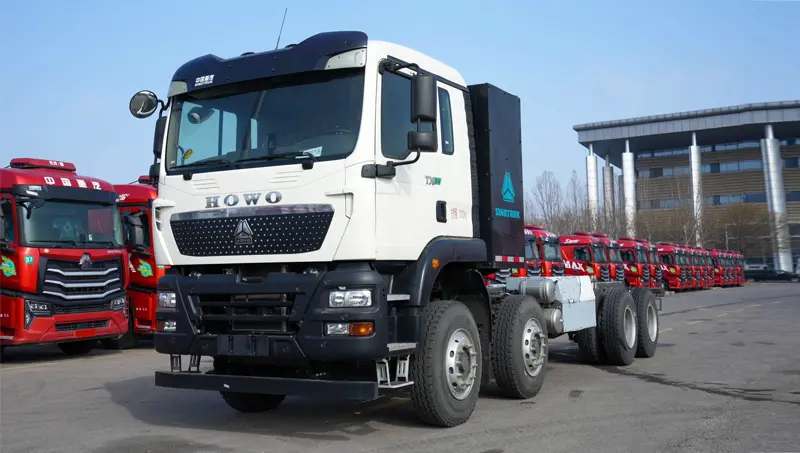
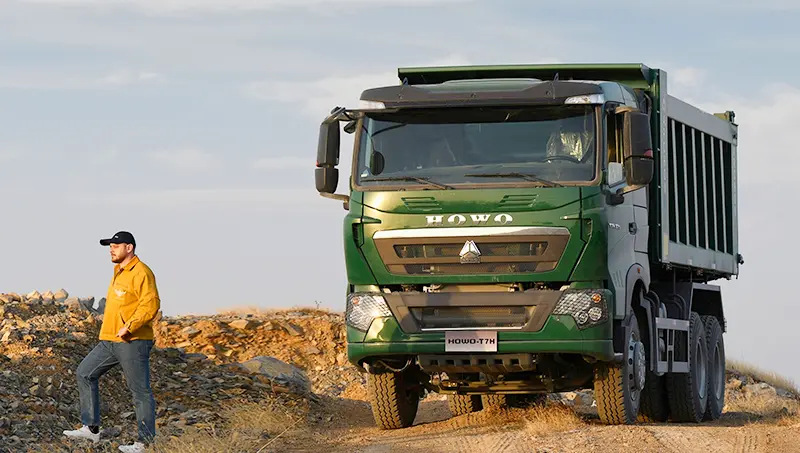
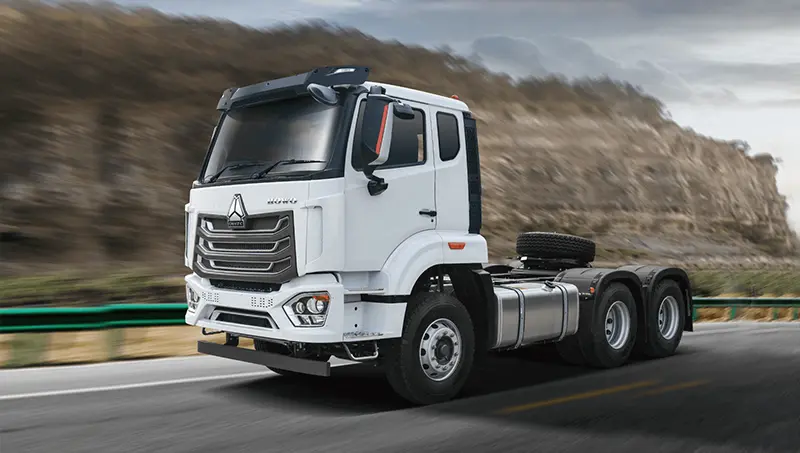
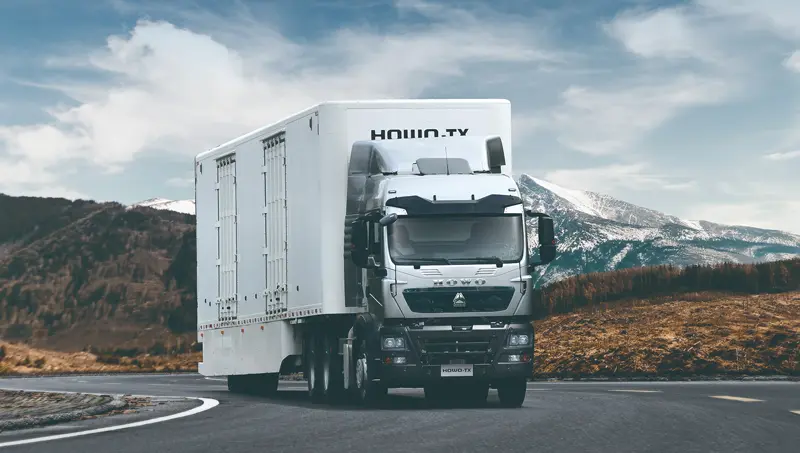
HOWO’s electric range is not a single truck with a battery bolted on. It spans tractor units, tippers, and dump trucks built on dedicated electric architectures, with battery capacities and axle ratings matched to different haul profiles. The core lineup is documented on the official product page at Sinotruk HOWO Electric Trucks , and the following models represent the configurations most relevant to export buyers.
HOWO TX 8×4 Electric Tipper Truck (ZZ3317V446GZ1SBEV35) is a 31-tonne GVW tipper with a 1800+3825+1350 mm wheelbase, positioned for construction and bulk material haulage where high payload and short-cycle tipping matter more than long-range cruising. For buyers who need a pure-electric tipper without moving to the larger V7-X platform, this is the entry point into HOWO’s 8×4 electric dump family.
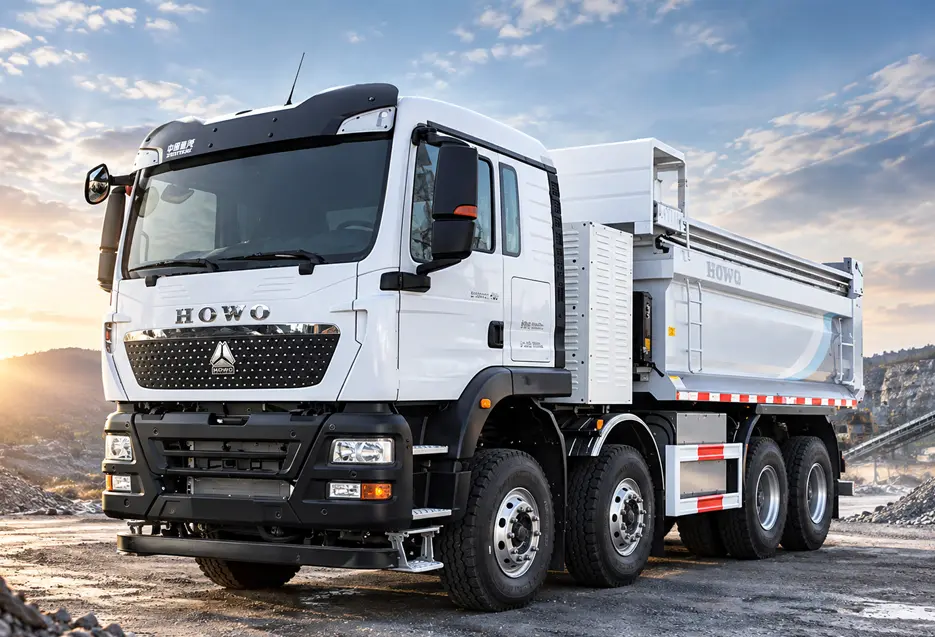

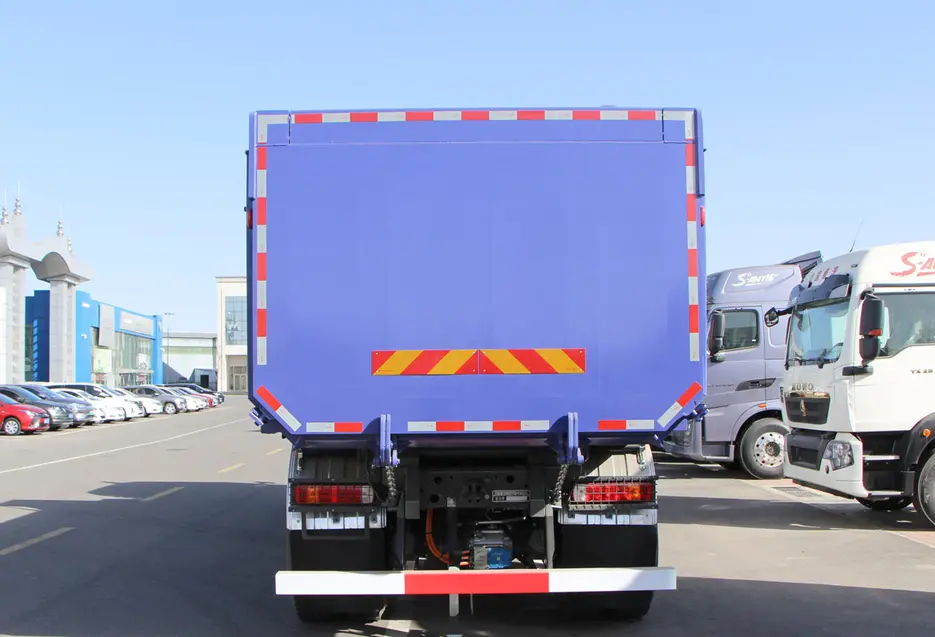
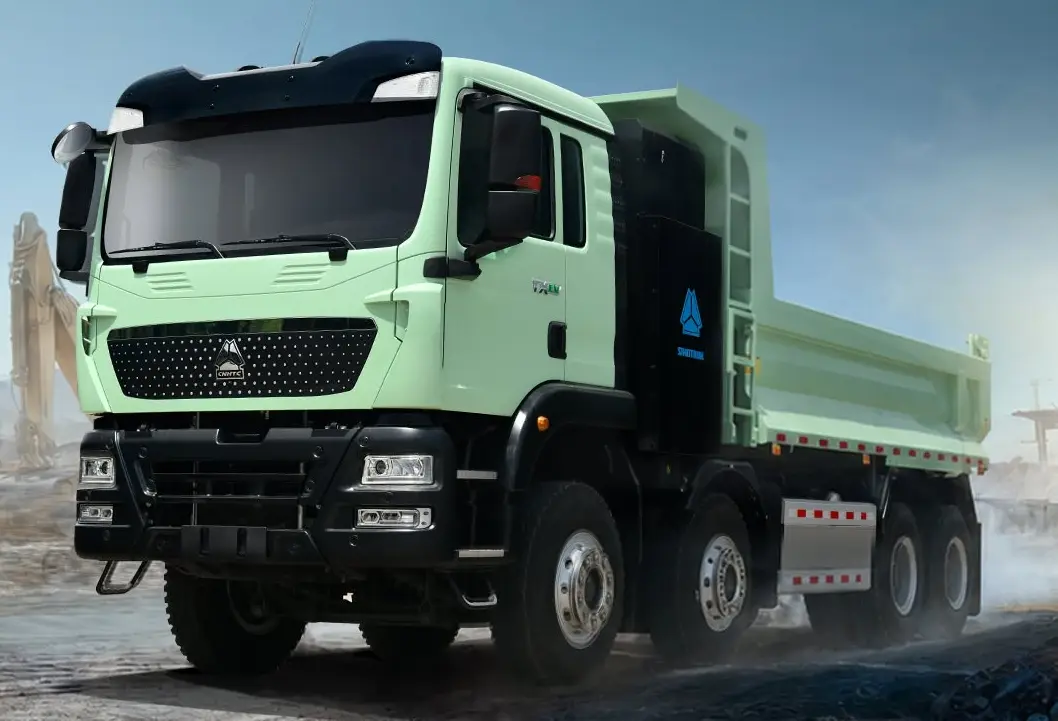
HOWO V7-X 8×4 Electric Dump Truck (ZZ3312V3267Z11SEV) uses CATL battery packs and a 1800+3225+1350 mm wheelbase configuration, targeting mining and quarry duty where battery cycle life and thermal stability are decisive. The V7-X platform also appears in a 6×4 Pure Electric Tractor Head (ZZ4254V3841Z1BEV) with a 3825+1350 mm wheelbase and an 89 km/h maximum speed, aimed at container and general freight operations that need highway-capable tractor performance rather than site-limited haulage.

Howo V7-X 8×4 Electric Dump Truck
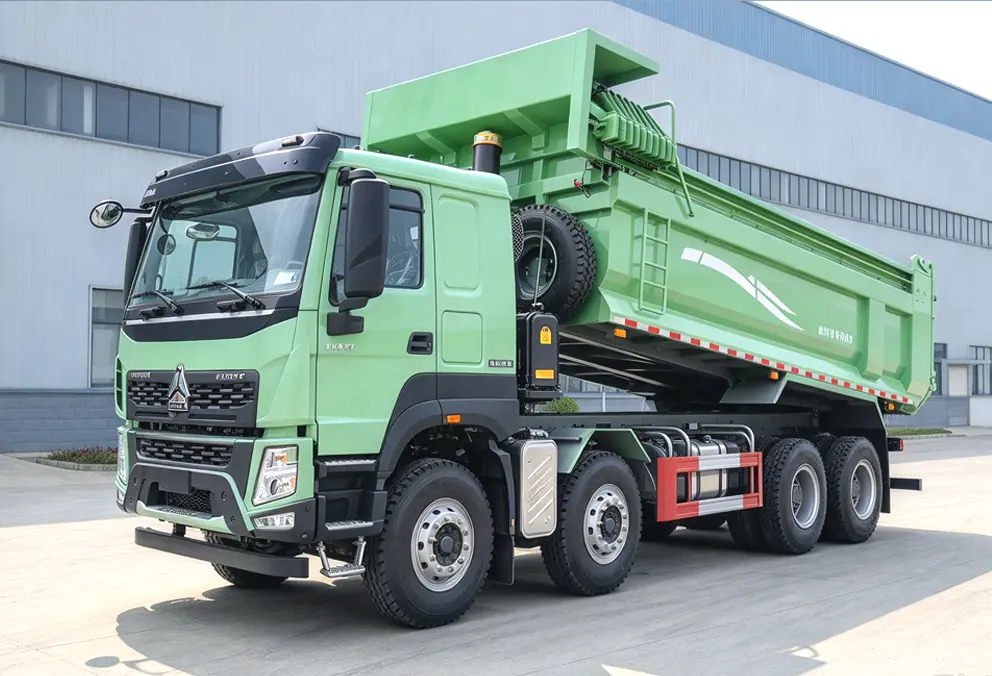
Howo V7-X 8×4 Electric Dump Truck

Howo V7-X 8×4 Electric Dump Truck

Howo V7-X 8×4 Electric Dump Truck
The Sinotruk V7-X EV 8×4 Electric Tipper Truck (ZZ3312V3267Z11BEV) is rated at 80 km/h with a CLTC range of 240 km, a configuration that suits closed-loop tipper work where return-to-base charging is predictable. Its tractor counterpart, the HOWO V7-X EV 6×4 Electric Tractor Truck (ZZ4252V3847Z1FCEV) , shares the 3825+1350 mm wheelbase and 89 km/h top speed, but is built around a fuel-cell-electric powertrain—relevant for fleets exploring hydrogen as a range-extension pathway where BEV charging is constrained.
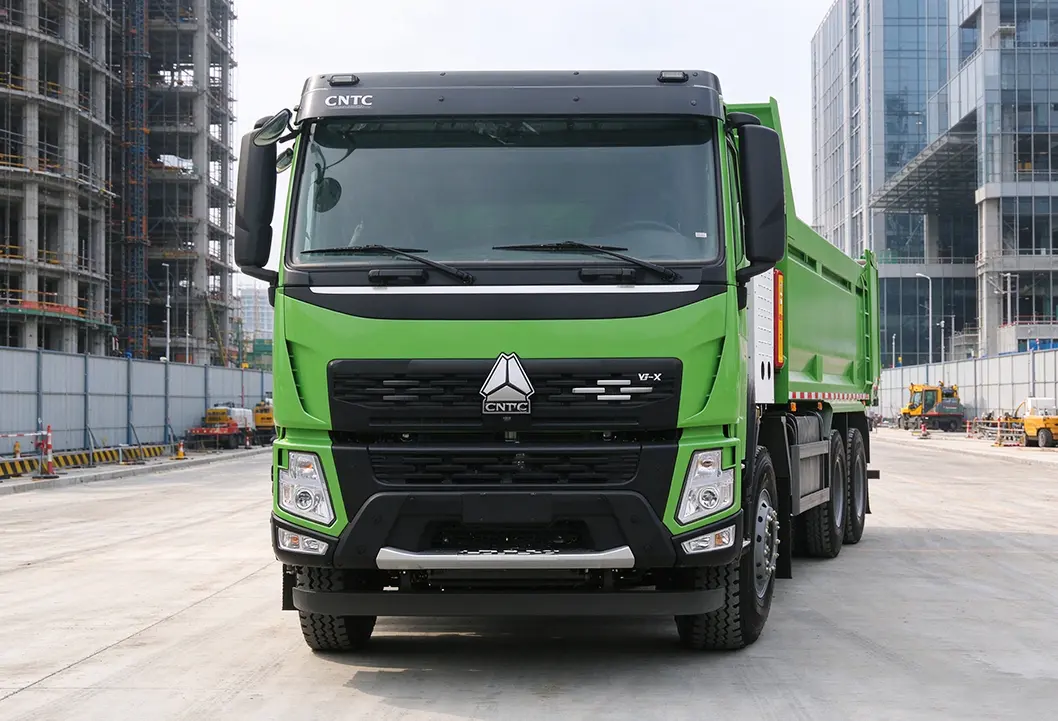

Sinotruk V7-X EV 8×4 Electric Tipper Truck

Sinotruk V7-X EV 8×4 Electric Tipper Truck

Sinotruk V7-X EV 8×4 Electric Tipper Truck
For buyers prioritising longer range in dump-truck duty, the SITRAK G7S EV 6×4 Electric Dump Truck (ZZ3256Y464HZ1BEV6A) carries a CLTC range of 500 km, the highest in HOWO’s electric tipper range, with an 88 km/h maximum speed. At the tractor end, the SITRAK C7 6×4 Electric Tractor Truck (ZZ4256V384HZ1FCEV) is a 6×4 fuel-cell tractor with a 7,000 kg front-axle allowable load and A2 licence compatibility, positioned for heavier trailer combinations where BEV range would force en-route charging stops.
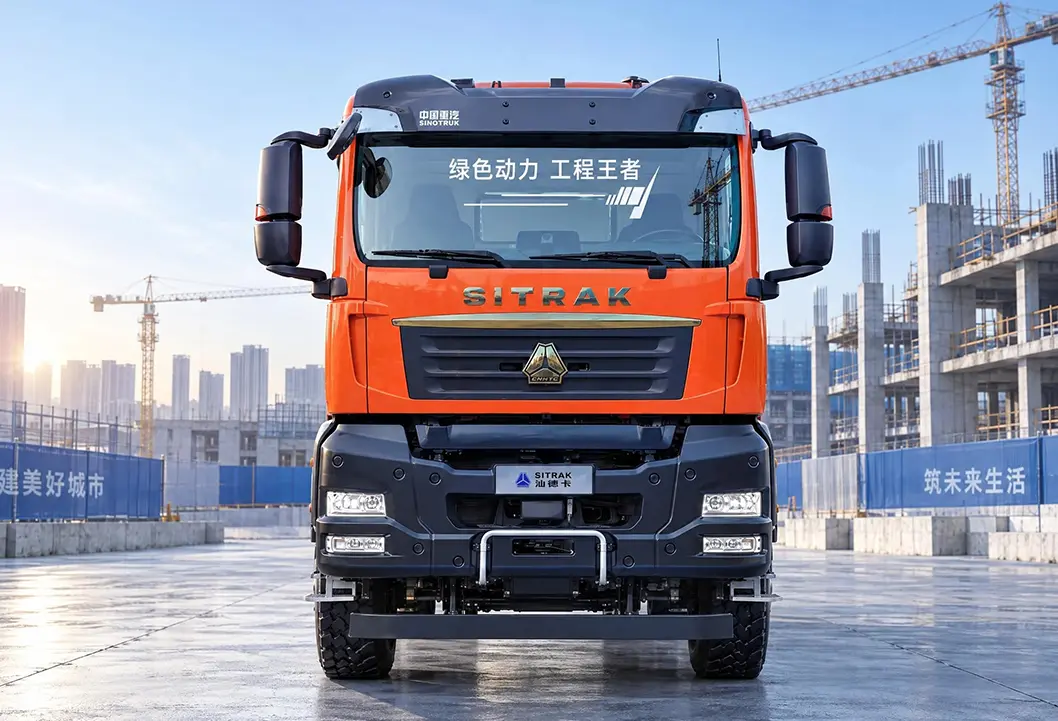
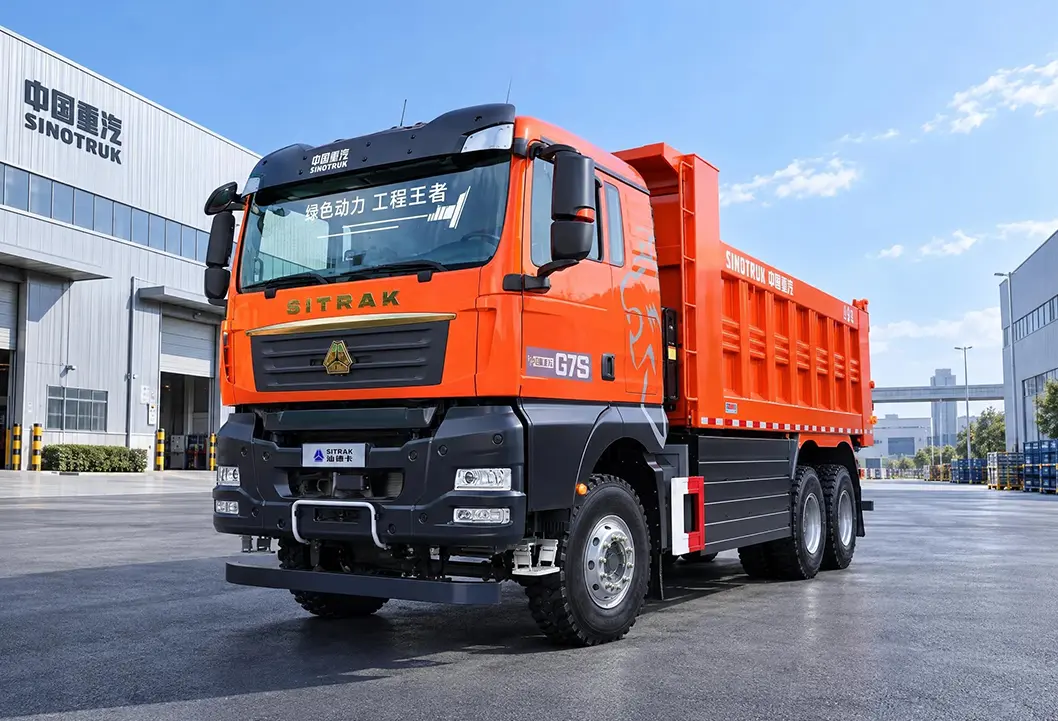
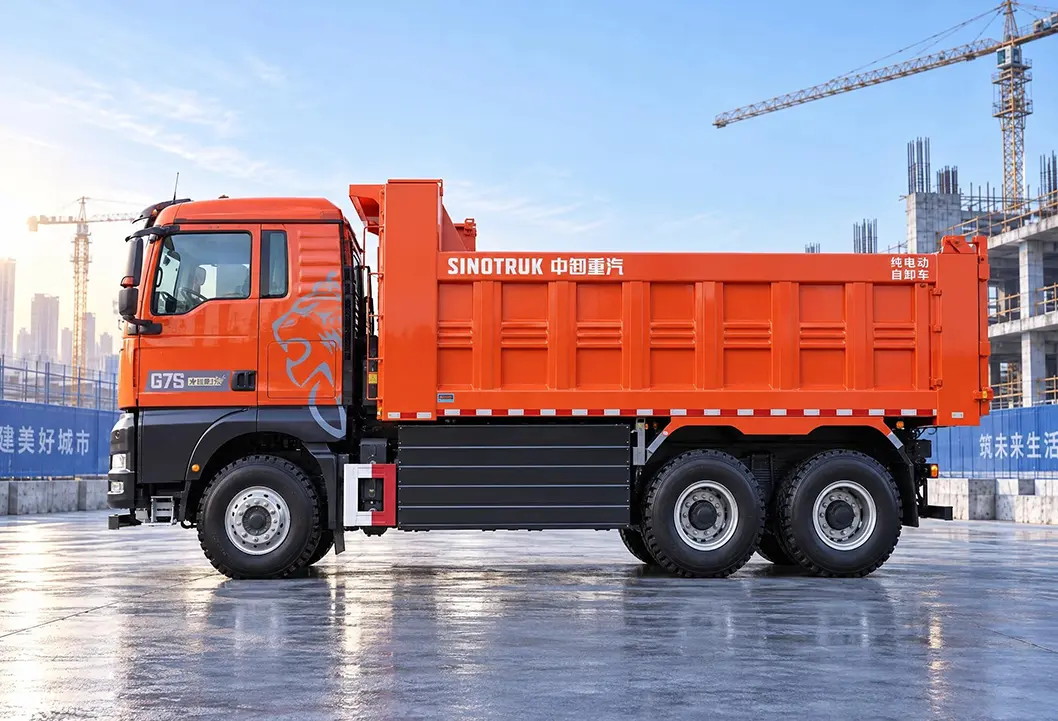
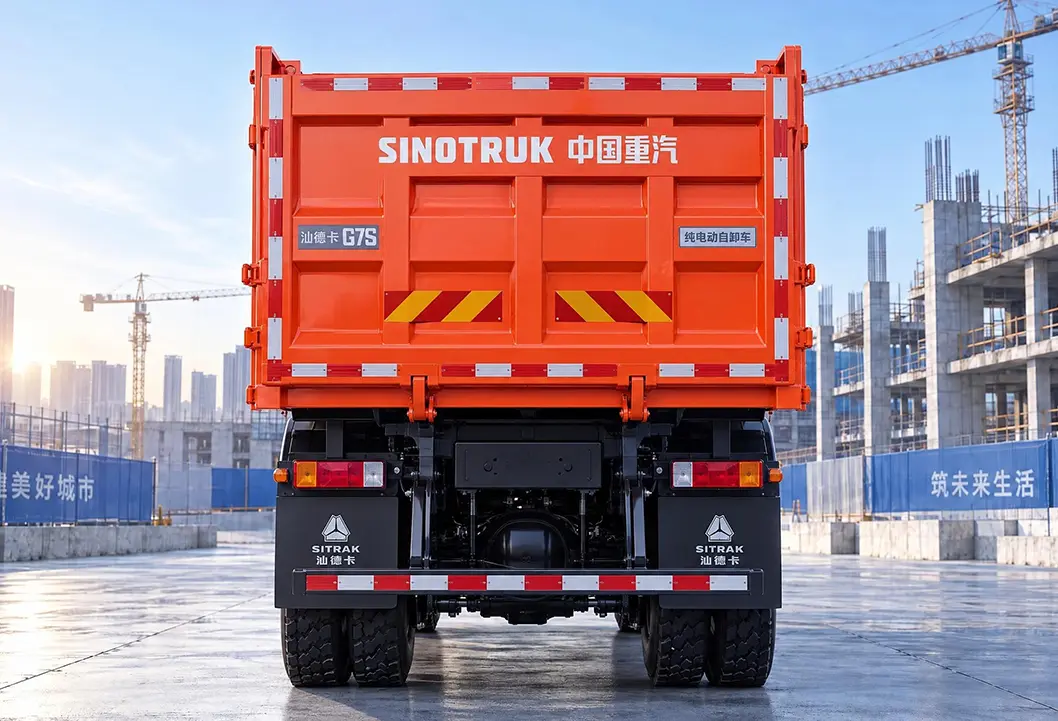
The HOWO TX Pure Electric Dump Truck (ZZ3317V326GZ1BEV61) returns to the 31-tonne GVW class with an 1800+3275+1350 mm wheelbase, offering a second TX-based tipper configuration for buyers who want the TX cab and service ecosystem in a dump application. For conventional BEV tractor demand, the HOWO TX 6×4 Pure Electric Tractor Truck (ZZ4257Y344GZ1BEV42) is a 10-wheel 6×4 with overall dimensions of 7080 × 2520 × 3135 mm, suited to standard container and freight work where a compact tractor footprint matters.
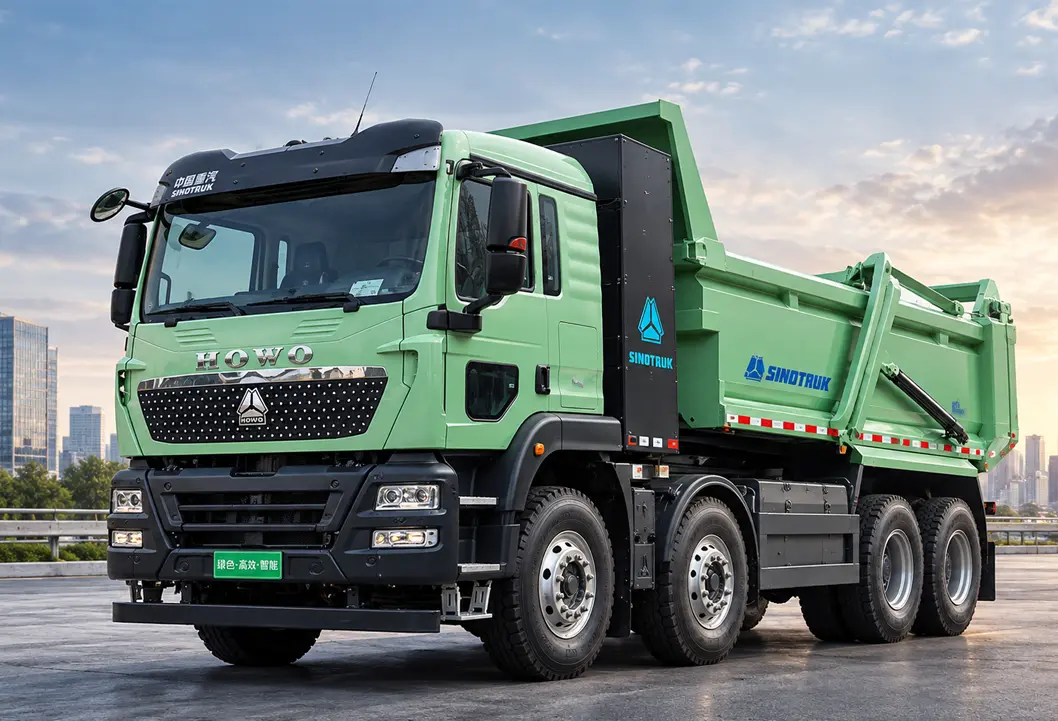
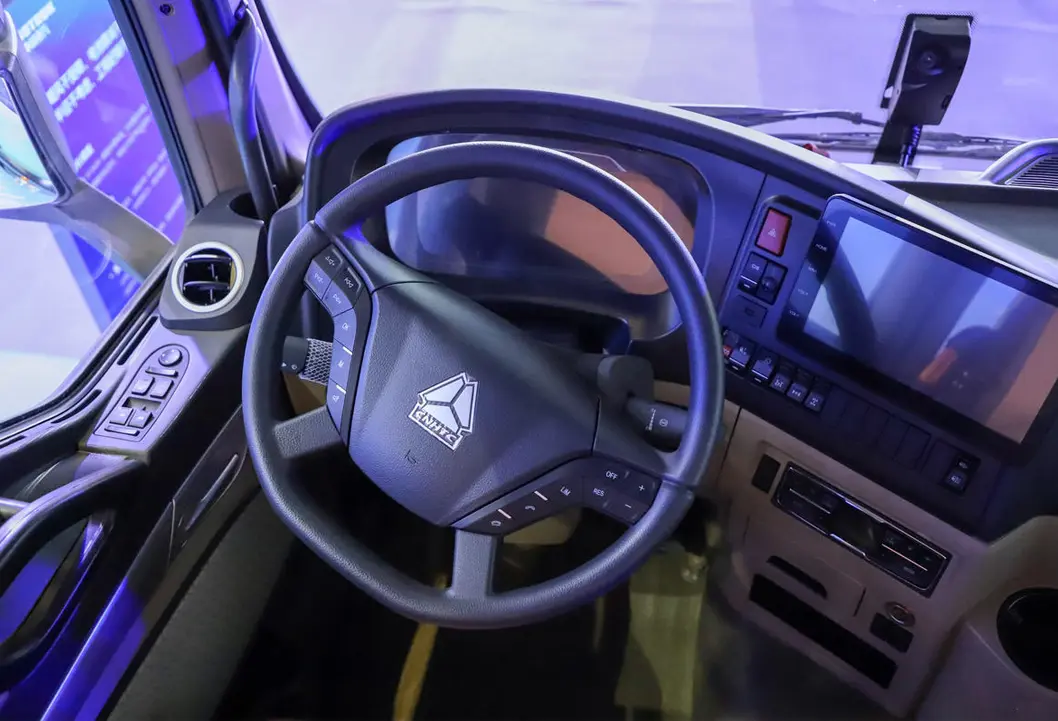
Two further tractor options round out the volume BEV range. The HOWO V5-X 6×4 Electric Tractor Truck offers a 2.48 m vehicle width and a 410 kW peak motor power, a specification that fits regional haulage and port drayage where narrower body dimensions and strong gradeability are useful. The HOWO V7-X 6×4 Electric Tractor Truck (ZZ4252V3847Z11SEV) pairs the V7-X cab with CATL battery storage and a 3825+1350 mm wheelbase, mirroring the V7-X tractor architecture in a BEV configuration rather than fuel-cell.


These models are not catalogue abstractions. HOWO’s parent, Sinotruk, held a 16.1% share of China’s new energy heavy truck market by August 2026, with cumulative sales exceeding 31,100 units, and the HOWO TX new energy platform has been deployed in bulk deliveries to concrete mixer, dump, and tractor fleets. That installed base matters for export buyers because it means the diagnostic procedures, parts catalogues, and technician familiarity are not being invented for a one-off export order.
The Export Details That Decide Whether the Truck Earns: Charging, Service, and Compliance
An electric truck from China for sale is only a good purchase if it can be charged on your site and serviced in your language. On charging, HOWO electric trucks are built around GB/T DC fast-charging architecture, and export units can be specified with CCS2 or CCS1 inlet configurations depending on the destination market. This is not a plug-adapter afterthought: multi-standard DC chargers are now commercially available with GB/T, CCS1, and CCS2 outputs in the 60–600 kW range, and buyers should confirm the inlet standard at the quotation stage rather than assuming GB/T hardware will interface with local infrastructure. For multi-shift operations, DC fast charging from 20% to 80% in roughly 40–60 minutes is achievable on high-capacity packs, while single-shift urban and regional fleets can often rely on overnight AC charging at 22 kW, which reduces infrastructure cost substantially.
Service depth is where Sinotruk’s export model differs from smaller Chinese EV truck brands. Sinotruk operates more than 1,000 overseas service outlets and over 40 regional parts hubs, with new-energy-specific spare-parts pre-positioning for battery, motor, and controller components. The company has run dedicated electric-truck technician training in Latin American markets including Mexico, Bolivia, Colombia, Peru, Ecuador, Chile, and Venezuela, covering high-voltage safety, electric drive systems, power battery diagnostics, and vehicle control faults—the exact skill set that determines whether a grounded truck returns to service in days rather than weeks. For a fleet buyer comparing an electric truck from China for sale, the question to ask is not only “what is the battery capacity?” but “where is the nearest trained HV technician and how many brake-chamber or DC-DC modules are stocked in-region?” Sinotruk’s export structure is built around answering that question before the truck lands.

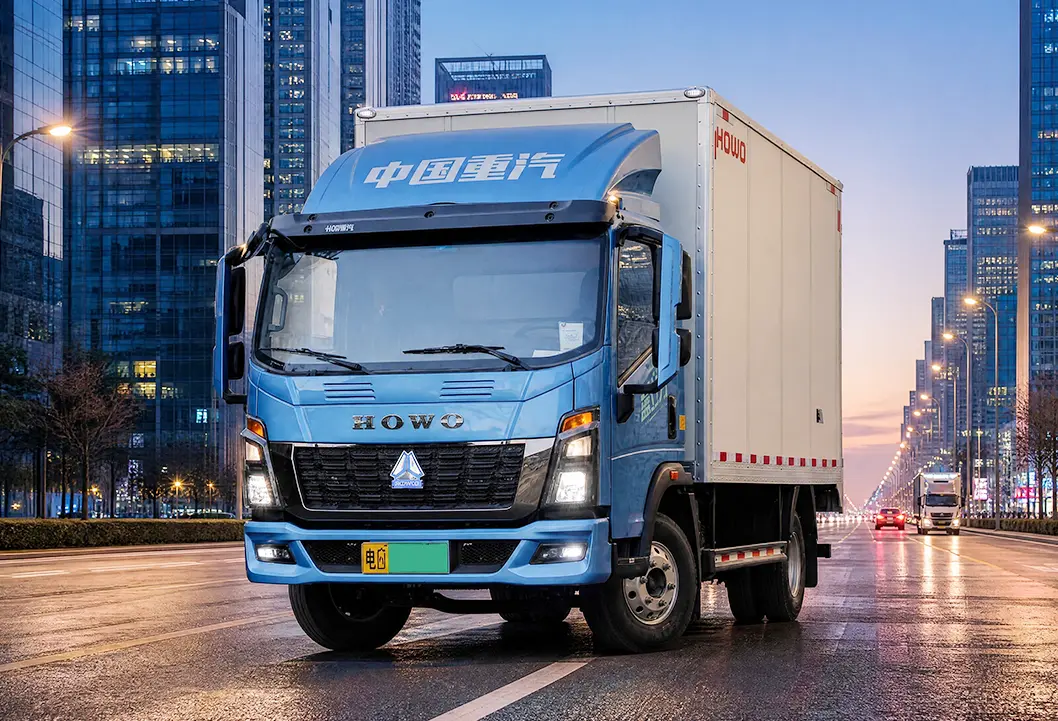


Compliance requirements vary sharply by destination, and they affect which HOWO model can be legally registered. For European Union markets, electric commercial vehicles must meet WVTA (Whole Vehicle Type Approval) under Regulation (EU) 2018/858, including UN R100 high-voltage safety and UN R10 electromagnetic compatibility, and from April 2026 Euro 7 adds requirements for brake particulate emissions, tyre-wear emissions, and OBD/remote-monitoring conformity with UNECE R156 and R157 plus GDPR data-localisation provisions. These are not box-ticking exercises for a heavy truck: brake particle and tyre-wear testing require EU-accredited lab work, and telematics architecture must support secure over-the-air updates and tamper-resistant logging. For Southeast Asian, African, and Latin American markets, the compliance path is generally less prescriptive but still requires written confirmation of homologation or type approval, import duty classification, and local warranty recognition before the order is placed. A credible Chinese electric truck exporter will provide a destination-specific compliance sheet, not a generic CE declaration.


How to Specify a HOWO Electric Truck for Export Without Overpaying for the Wrong Battery
The most common specification error in electric truck procurement is sizing the battery for the longest conceivable route rather than the actual daily duty cycle. A 600 kWh pack adds cost, tare weight, and charging time; if the truck returns to base every 200–250 km, a 350–422 kWh configuration may deliver the same operational availability at a lower capital cost and higher payload. For tipper and dump applications, the energy variable is gradient and payload, not distance alone: a loaded uphill haul at 6% grade can consume 2.4–3.0 kWh/km, while the same road loaded downhill with regenerative braking can net 0.9–1.4 kWh/km, which means the same truck specification can be either energy-limited or payload-limited depending on the haul profile. Buyers should establish the one-way haul distance, net gradient, material density, and shift pattern before choosing between a 282–350 kWh TX tipper, a 400 kWh V7-X configuration, or the larger-battery SITRAK G7S EV with its 500 km CLTC range.
Body specification for electric tippers deserves the same scrutiny. A rock body built with thicker wear plate and reinforced side walls adds tare weight and reduces payload every cycle; specifying it for coal or soft aggregate wastes energy and tyre life. Conversely, a soft-material body used on abrasive ore will wear through faster than the payload savings justify. For cold or wet operations, an electrically heated body floor prevents carry-back, but it draws 2–5 kW from the traction pack when active—a detail that belongs in the energy budget, not in the fine print.
A Realistic Next Step: Match the Model to the Route, Then Verify the Export Stack
The right electric truck from China for sale is the one whose battery, axle, body, and charging standard are specified against your haul profile—and whose exporter can document the service footprint and compliance pathway for your country. HOWO’s electric range covers the main heavy-duty use cases, from the TX 8×4 electric tipper for construction and bulk haulage to the V7-X 6×4 electric tractor for container and regional freight, the SITRAK G7S EV dump truck for longer-range tipper work, and the V5-X and TX tractor platforms for cost-sensitive port and short-haul operations. The model pages on Sinotruk HOWO Electric Trucks list the specific model codes, wheelbases, GVWs, and battery brands for each configuration, which gives a fleet buyer a starting point for a specification conversation rather than a generic brochure.
Before committing to a unit, request three things in writing from the exporter: the destination-specific charging-inlet configuration and a list of compatible DC charger models available in your market; the nearest authorised service outlet and the new-energy parts stocked there; and the homologation or type-approval documents required for registration in your country. A Chinese electric truck is a capital asset with a 5–8 year operating horizon. The purchase decision that protects that asset is not the one with the lowest FOB number—it is the one where the battery, the charging architecture, the technician network, and the customs paperwork are all confirmed before the truck leaves the factory.


SINOTRUK HOWO