

SINOTRUK HOWO


en

Search for “China tipper trucks prices in Ghana” and you will mostly find two kinds of information: FOB quotations and local transaction prices. Between them sit ocean freight, duty, VAT and overaged penalties — but the more important question comes before price: which truck are you actually buying? The Chinese tippers sold in Ghana are not one product. HOWO NX, HOWO TX, HOWO A7 and Sitrak C7H differ significantly in platform generation, powertrain, design payload and intended duty cycle. Choose the wrong model and even a low purchase price gets consumed by downtime and compliance cost.
This article is built around model introductions. It works through Sinotruk’s four product lines in Ghana one by one, then explains how Ghana’s axle-load rules constrain model selection in reverse.
Public 2026 price data for Ghana’s tipper market broadly falls into the following distribution:
| Category | Typical model / age | Price range (GHS) | Price range (USD, approx.) |
| Used HOWO 6×4 | 2018–2020, foreign used | 350,000 – 500,000 | $25,000 – $35,000 |
| New HOWO NX 6×4 | New, 371 hp class | — | ~$42,800 – $54,550 |
| New HOWO TX 6×4 | New, 371–430 hp | — | ~$37,800 – $43,000 (CIF reference) |
| New HOWO 8×4 | New, 371–430 hp | — | ~$46,500 – $75,000+ |
| New 10-wheel / 20 m³ class | New | 770,000 – 1,300,000 | ~$64,000 – $108,000+ |
HOWO’s price span in Ghana runs from roughly GHS 330,000 for used units to over GHS 1 million for new large-capacity trucks, depending on model, age, body specification and import status. Used HOWO 6×4 units (2018–2020) sit in the GHS 350,000–500,000 band, while new HOWO NX dollar quotations cluster in the USD 42,000–55,000 range. But a price table does not answer the key question: if both are “HOWO 6×4,” where does NX end and TX begin, and who is A7 actually for?
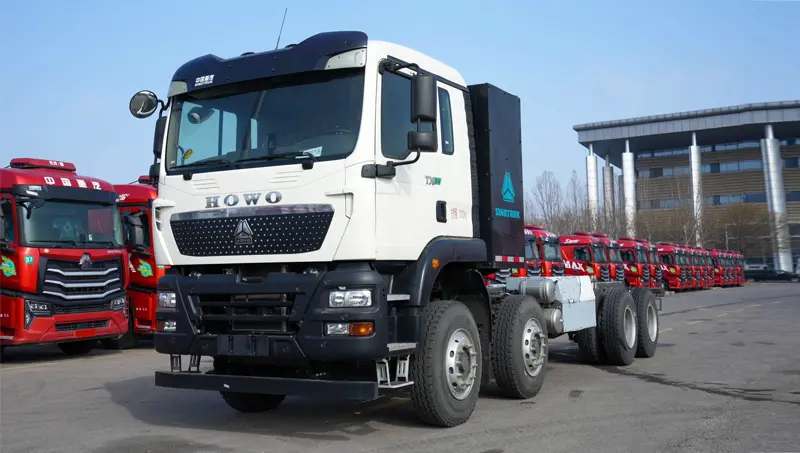
The HOWO NX is Sinotruk’s standardized, modular medium-heavy truck platform for African markets. Its positioning is “economy first, with enough heavy-duty capability retained.” In Ghana it is the model new 6×4 tipper buyers most often encounter.
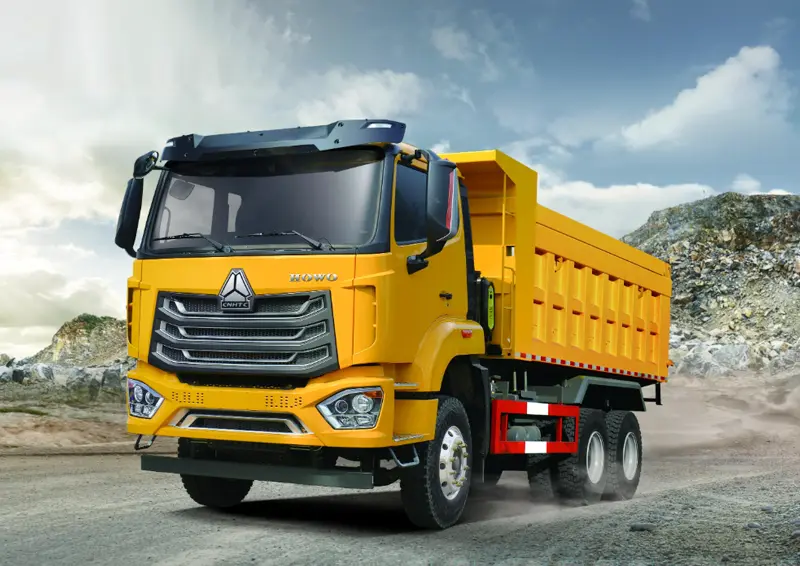

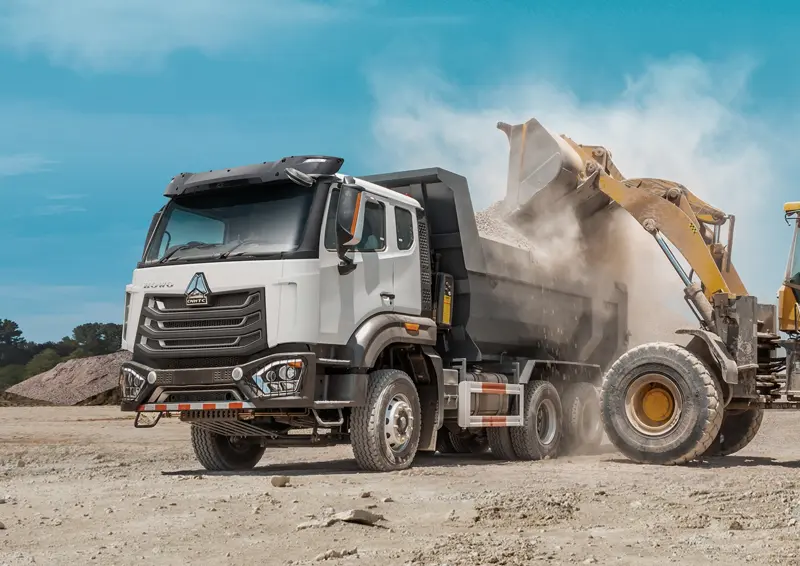

Key specifications (typical Ghana configuration):
| Parameter | HOWO NX 6×4 |
| Drive | 6×4, 10-wheel |
| Engine | WD615.47, 9.726 L, 371 hp, Euro II |
| Transmission | HW19710, 10 forward + 2 reverse |
| Front axle | 9.5-tonne class |
| Rear axle | 16 t + 16 t tandem |
| Tyres | 13R22.5 tubeless (Ghana climate fitment) |
| Body volume | 16–22 m³ |
| Gross vehicle weight | 25,000 kg |
| Curb weight | ~12,400–12,500 kg |
The NX’s core logic is a low-cost combination of proven assemblies. The WD615.47 engine and HW19710 transmission have enormous installed bases in Africa, low repair barriers, and parts availability in Accra’s Abossey Okai market and in Kumasi. The 13R22.5 tubeless tyre is a practical choice for Ghana’s persistent heat — tube-type 12.00R20 runs hotter on long hauls with higher blowout risk, while the tubeless construction has a clear advantage here.
Best-fit applications: sand and gravel haulage, urban construction sites, short-haul aggregate transfer. If the fleet’s priority is “new truck, low risk, easy parts,” the NX 6×4 is the most direct choice in this price band.
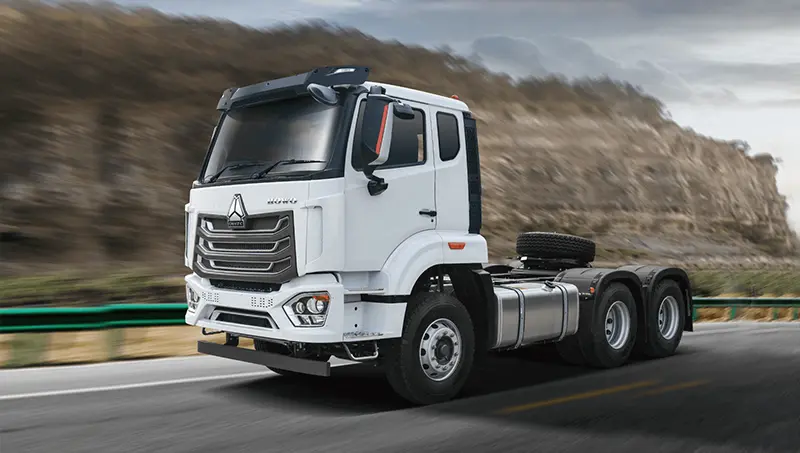
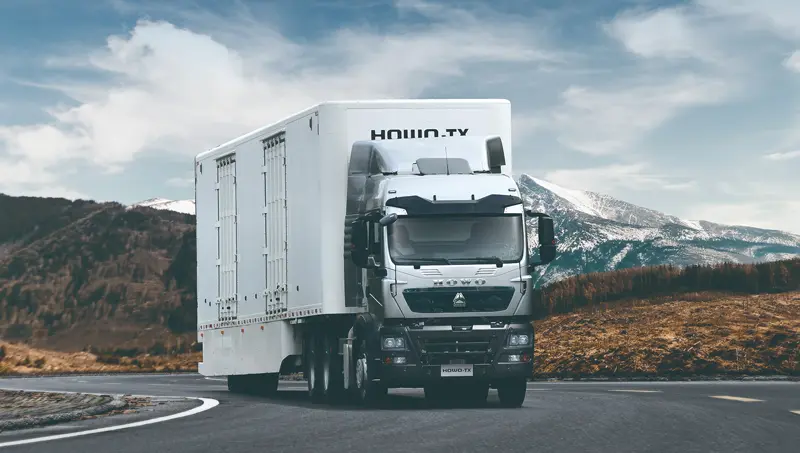
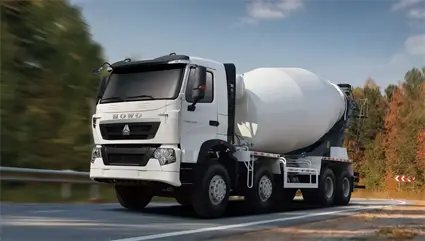
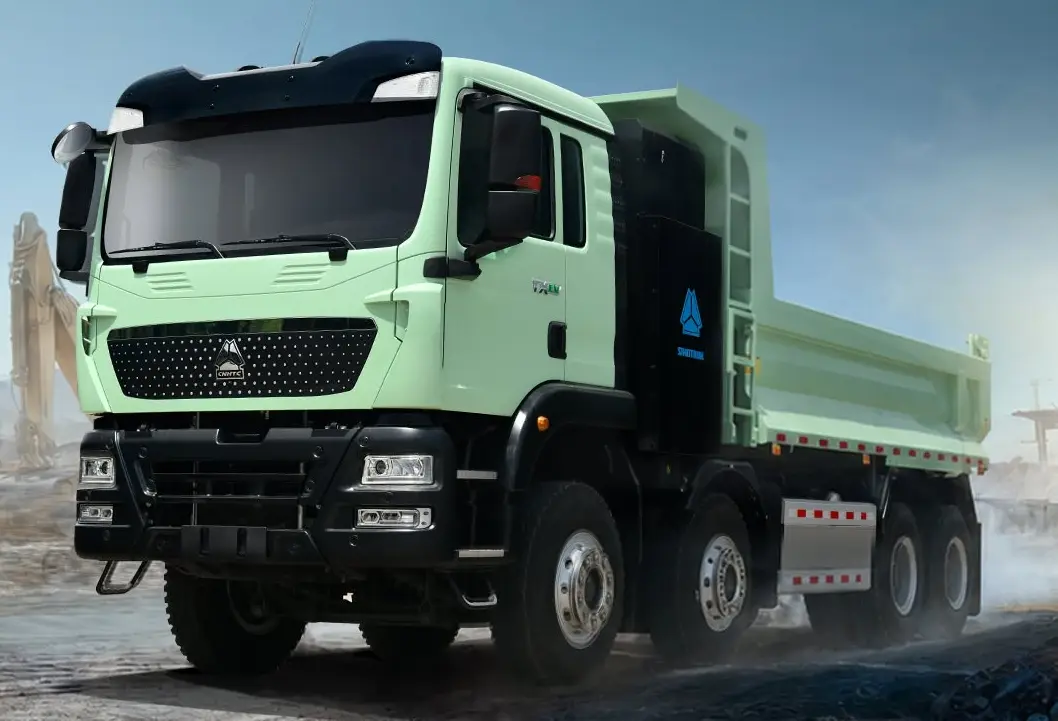
The HOWO TX sits above the NX in Sinotruk’s lineup, with a newer cab and chassis platform and a wider power range. In Ghana, the TX is offered in both 6×4 and 8×4 tipper form, with power from 371 hp up to 430–440 hp.
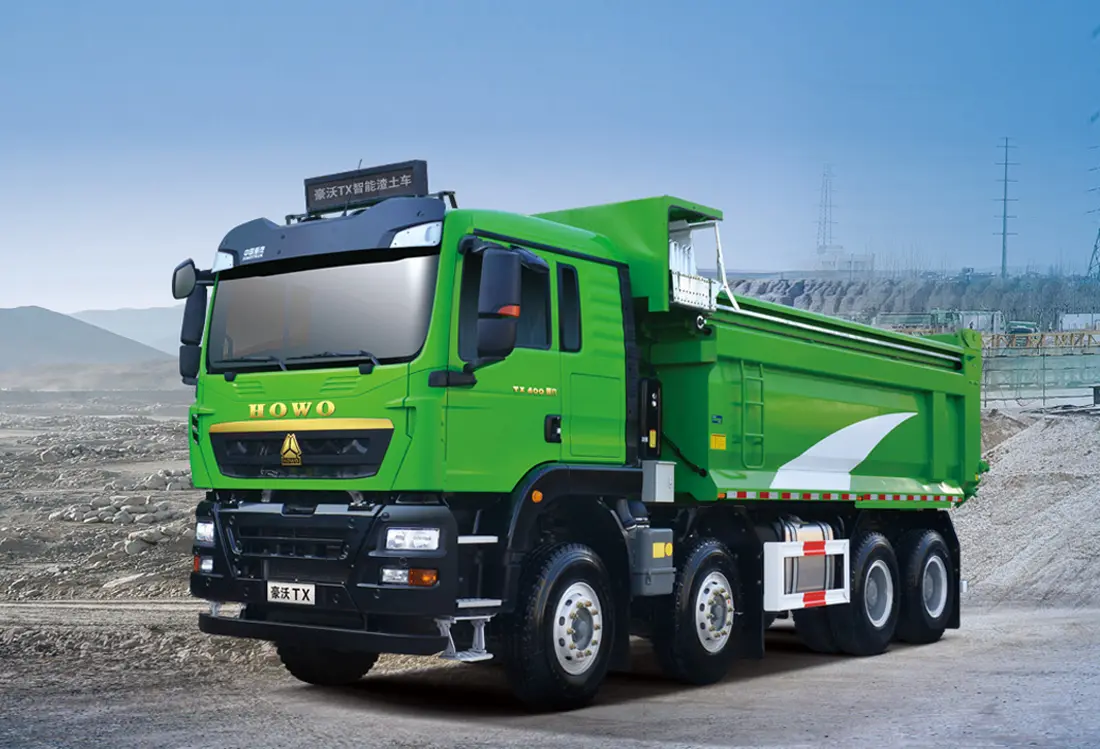
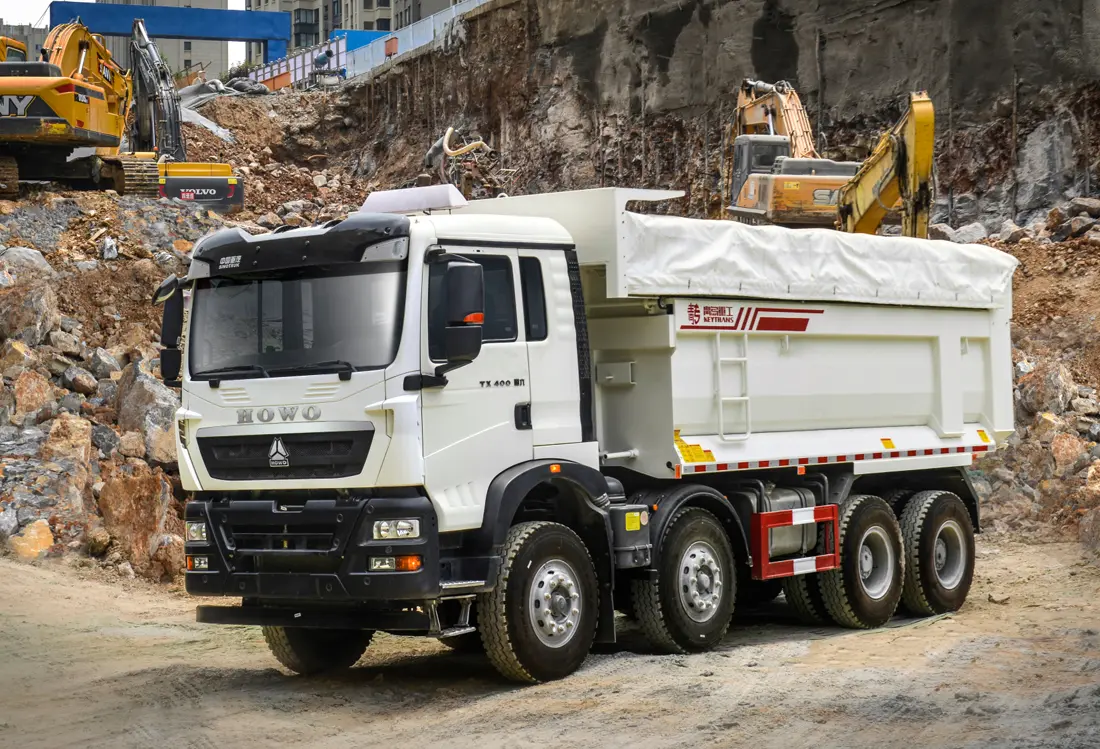
Key specifications (8×4 reference configuration, TX 430):
| Parameter | HOWO TX 430 8×4 |
| Drive | 8×4 (6×4 available) |
| Engine | Weichai WP12.430E201, 430 hp, Euro II |
| Maximum torque | ~2,100 N·m @ 1,000–1,400 rpm |
| Transmission | HW19710L, 10 forward + 2 reverse |
| Front axle | 9.5-tonne class |
| Rear axle | 16 t × 2 |
| Body dimensions | 7,300 × 2,300 × 1,500 mm, ~25 m³ |
| Gross vehicle weight | 25,000 kg (homologation value; 8×4 listings vary) |
| Curb weight | ~9,700 kg |
| Cab | TX-M (525 mm) or TX-F (749 mm) |
The TX’s differentiator is not “carrying more” but an upgrade in power reserve and cab comfort. The 430 hp / 2,100 N·m configuration is more relaxed than the 371 hp NX on loaded gradients and long heavy hauls, and the WP12’s displacement advantage shows in torque continuity. The extra drive axle in 8×4 form mainly improves rough-road traction and frame load margin — not the legal payload under Ghanaian law.
Best-fit applications: medium-to-long heavy haulage from quarry to processing plant, mining support work, and high-utilization fleets where driver hours and comfort matter. If the route includes sustained loaded gradients, the TX 430’s power advantage converts into real cycle-time efficiency.
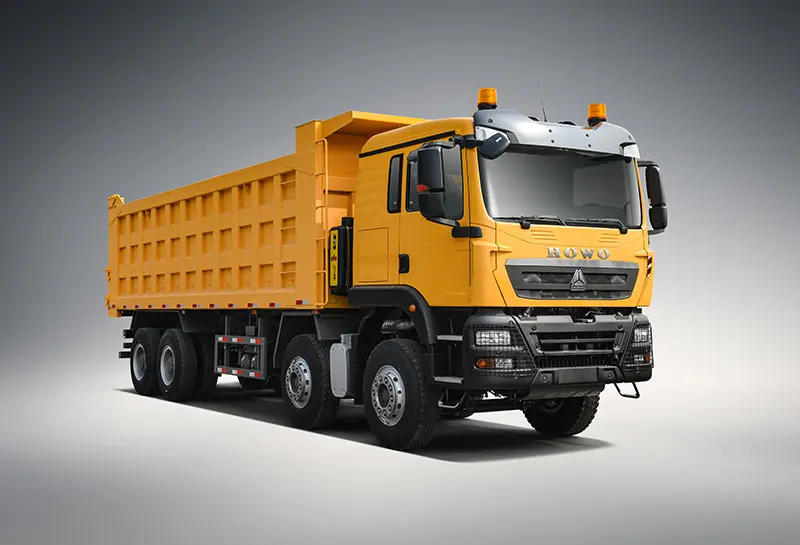
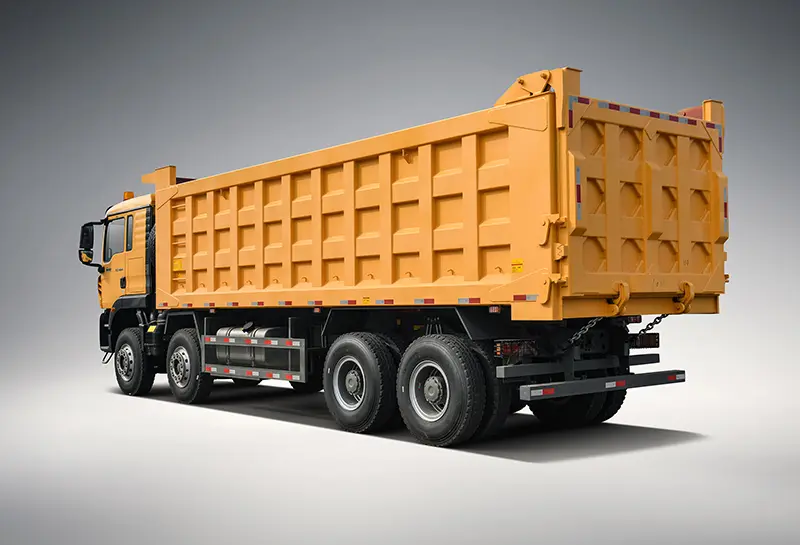
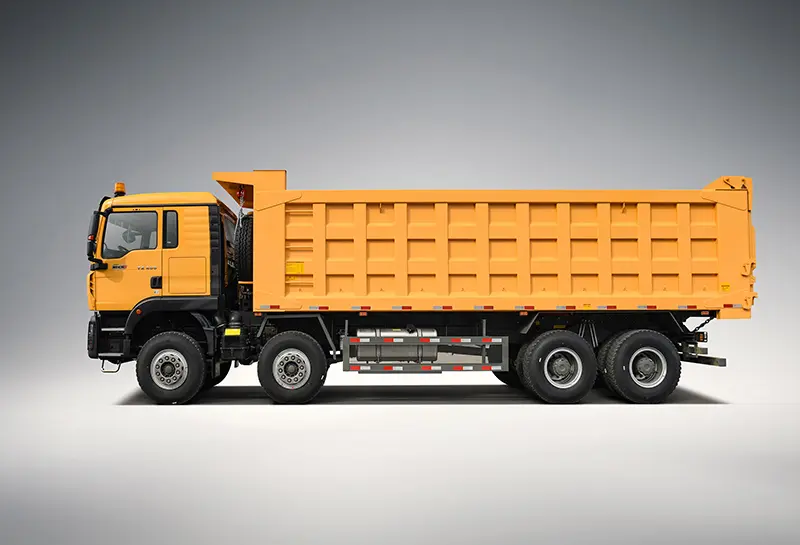
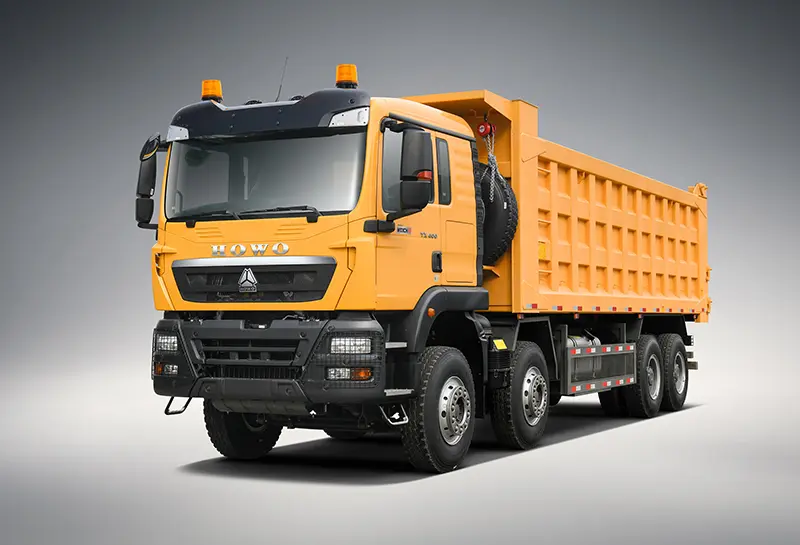
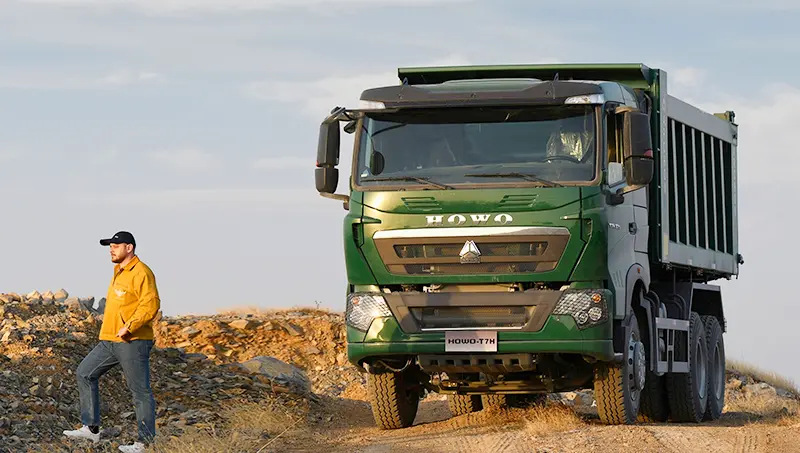
The HOWO A7 is Sinotruk’s classic heavy-duty platform positioned above the standard HOWO 6×4 in export markets, with design payload, frame and axle specifications tilted toward heavier duty. Published A7 figures show design payload covering 30–55 tonnes, gross weight up to 70 tonnes depending on configuration, availability in 6×4, 8×4 and 10×4 forms, and body volumes from 16 m³ to 40 m³.
Key specifications (A7 series reference):
| Parameter | HOWO A7 6×4 | HOWO A7 8×4 |
| Design payload | 30–40 t | 30–55 t (configuration-dependent) |
| Body volume | 16–20 m³ class | 16–40 m³ heaped |
| Gross vehicle weight | 25,000 kg (homologation reference) | Up to 70,000 kg (configuration-dependent) |
| Front axle | HF9, 9-t class | 9-t class |
| Rear axle | HC16, 16 t per axle | AC16 / HC16 |
| Engine | WD615 series, 371–380 hp class | 380 hp class and above |
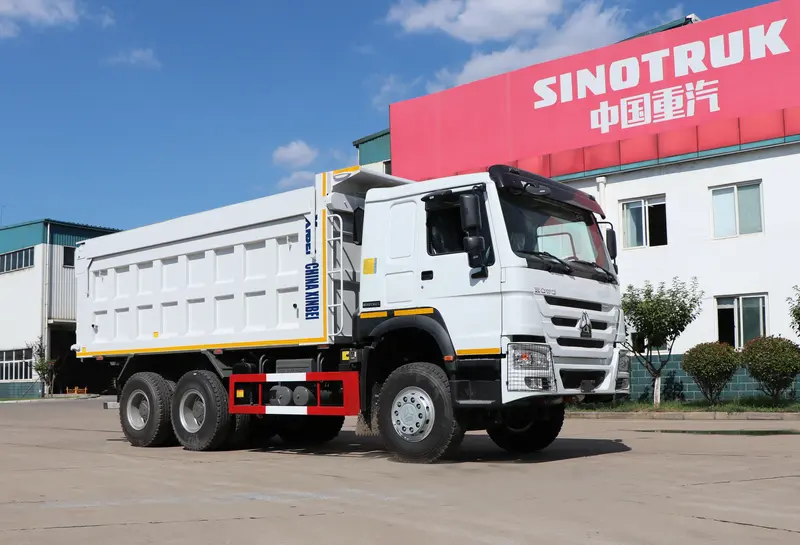
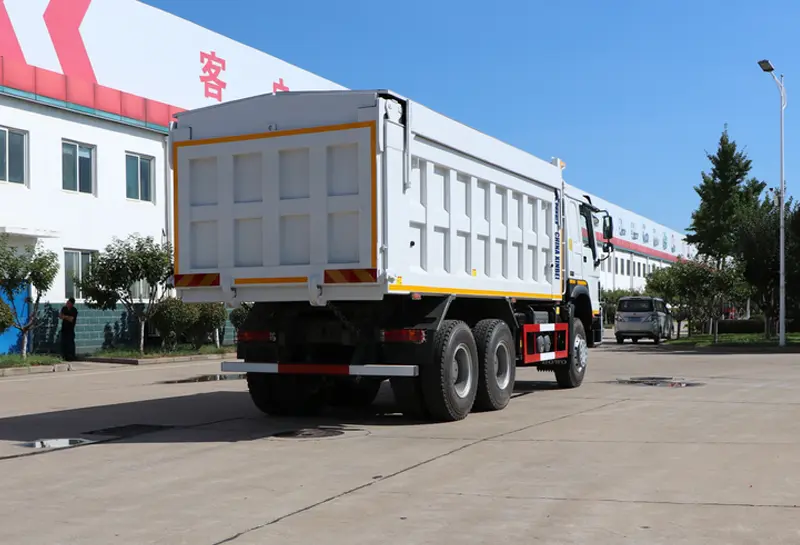
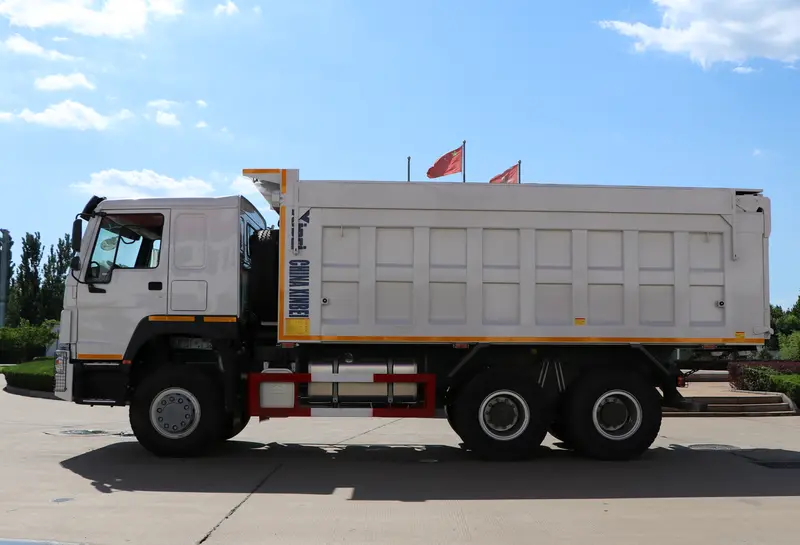
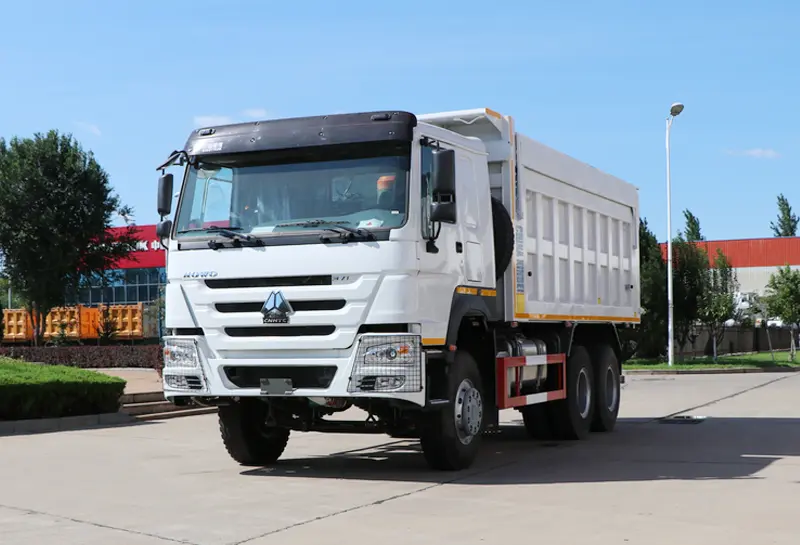
The A7’s value in Ghana must be understood in the right frame. Its high design payload does not translate into high legal payload on Ghanaian roads — the 30.5-tonne gross ceiling applies to the A7 just as it does to the NX. The A7’s real application is in conditions where frame and axle durability matter more than the payload number: unpaved mining roads, high-frequency heavy-load impact, and harsh quarry access routes. In those conditions, the A7’s heavier chassis specification provides structural margin, not extra legal tonnage.
Best-fit applications: mining support haulage, heavy-cycle large quarry work, and projects with poor road conditions and high chassis durability requirements. If operations are mainly paved-road and legal-load transport, the A7’s heavy-duty specification becomes unnecessary tare weight and fuel burn.
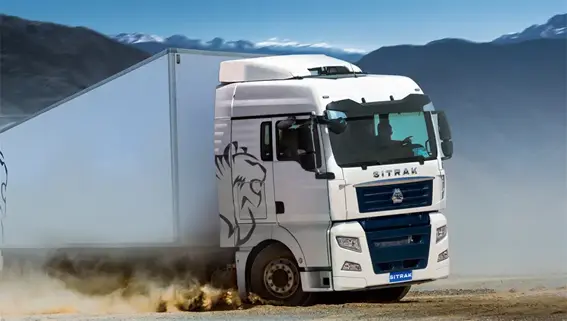
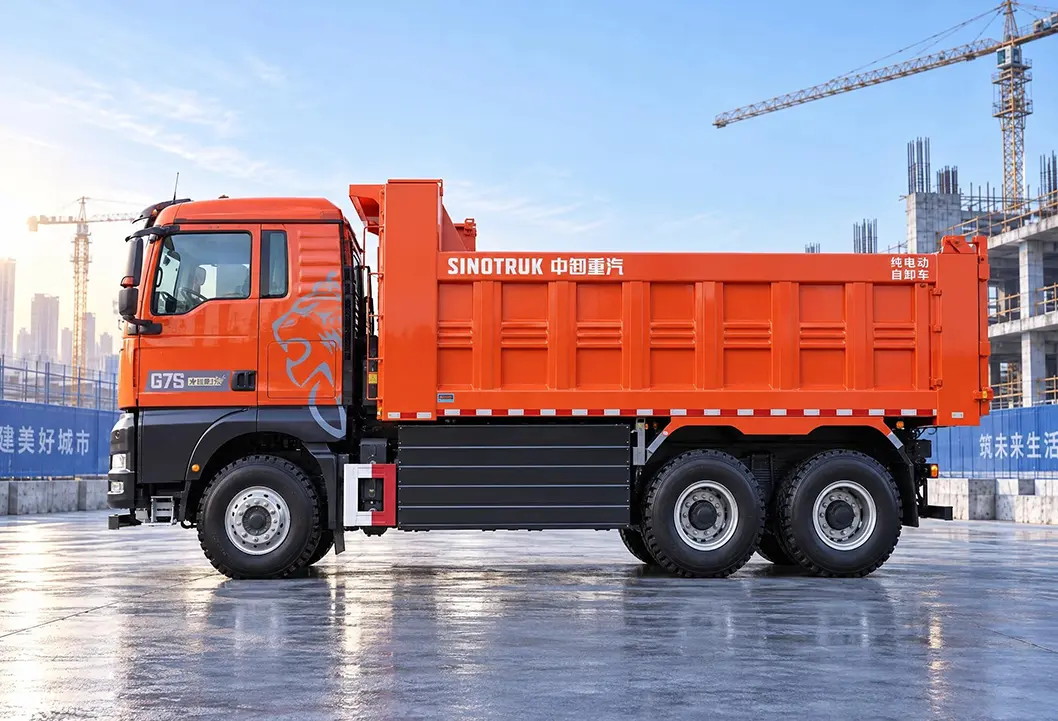
Sitrak sits above HOWO in Sinotruk’s brand hierarchy and uses MAN-derived technology. The C7H tipper is offered in 6×4 and 8×4, with power from 310–440 hp, 16 t + 16 t rear axles, and body volumes from 16–22 m³ (6×4) to 18–28 m³ (8×4). Higher-spec A7 versions have also adopted MAN-technology MC-series engines, with output up to 440–540 hp, torque of 2,200 N·m, and optional AMT.
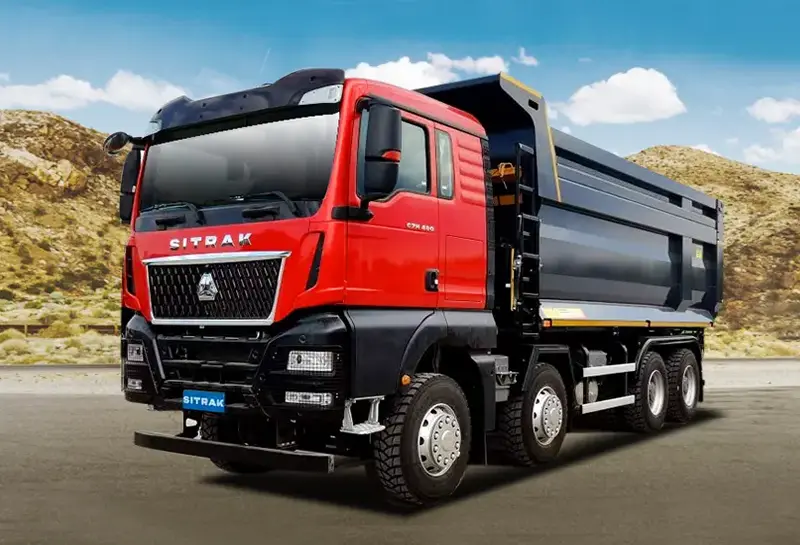

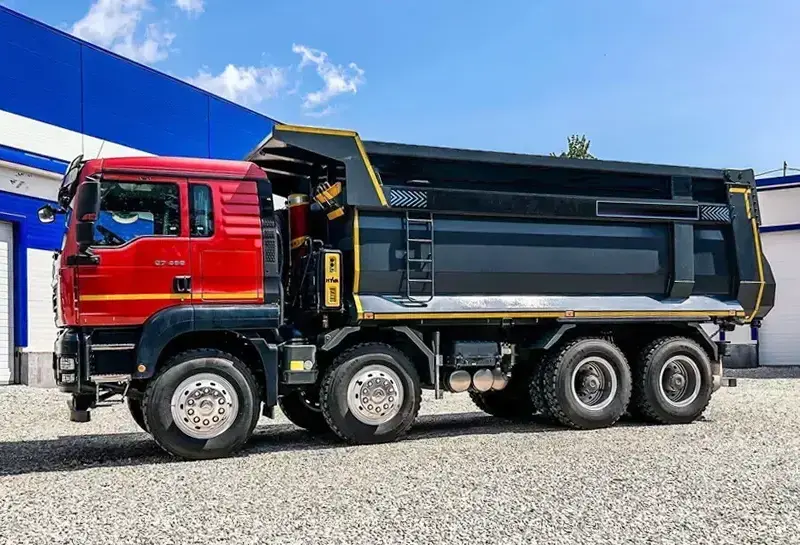

Key positioning
| Dimension | HOWO NX / TX | Sitrak C7H / A7 MAN-technology versions |
| Technology source | Sinotruk in-house WD615/WP series | MAN MC series or WP12/WP13 |
| Power ceiling | 371–430 hp | Up to 440–540 hp |
| Service interval | Standard heavy-truck cycle | Longer, suited to high utilization |
| Cab comfort | Utility-oriented | European-style, air-suspended cab available |
| Local parts coverage | Deepest | Smaller |
| Landed price | Lower | Higher |
The C7H and MAN-technology A7 advantage lies in fuel efficiency and service economics on long corridors and high annual mileage, not in obtaining higher legal payload under Ghanaian law. If annual mileage is limited and the operating radius is concentrated around a mine or construction site, the HOWO NX/TX’s parts convenience is usually worth more in practice than Sitrak’s technology tier.
Model introductions cannot be separated from Ghana’s weight regulations. Under the Road Traffic Regulations 2012 (LI 2180), the axle-load limit for goods vehicles is 11.5 tonnes per axle, and the maximum permissible gross vehicle weight was originally set at 27 tonnes, later raised by the Ghana Highway Authority to 30.5 tonnes. Public industry information further notes that a common Chinese 6×4 tipper has a curb weight of around 16 tonnes and a gross weight of 25 tonnes; even at the 30.5-tonne ceiling, the allowable payload is only about 14.5 tonnes, and under the original 27-tonne framework the safe payload was only about 9 tonnes.
This implies a counter-intuitive selection principle: body volume should be matched to legal payload, not to what the vehicle can physically hold. An 18 m³ body loaded to the brim carries roughly 30 tonnes of cargo; with a 16-tonne curb weight, the combination grosses 46 tonnes — 15.5 tonnes over the 30.5-tonne ceiling. In that configuration, the price premium an 8×4 carries over a 6×4 does not buy a proportional increase in legal payload.
The sensible division of labour among the four models in Ghana is therefore:
HOWO NX 6×4: sand and gravel, urban construction, short-haul legal-load work — meeting compliant operation at the lowest new-truck landed cost and with the deepest parts coverage.
HOWO TX 6×4/8×4: loaded gradients and longer hauls — paying a premium for power reserve and cab comfort, not for “more legal tonnage.”
HOWO A7 6×4/8×4: mining and harsh quarry roads — selected for chassis durability and structural margin, accepting that legal payload remains capped by gross weight.
Sitrak C7H / MAN-technology A7: high annual mileage, long corridors — selected for fuel efficiency and service intervals, justified only where utilization is high enough to amortize the higher purchase cost.
Q: What is the main difference between HOWO NX and HOWO TX in Ghana?
A: The NX is an economy-oriented proven platform with 371 hp WD615 power and the deepest parts coverage. The TX is a newer cab and chassis platform with a higher power ceiling (up to 430 hp), an available 8×4 configuration, better cab comfort and more power reserve — at a higher price. Both are constrained by the same 30.5-tonne gross ceiling in Ghana.
Q: The HOWO A7 is rated for 30–55 tonnes design payload. Can it carry that in Ghana?
A: No. The 30–55 tonne figure is design payload capacity, not legal payload on Ghanaian roads. Under the 30.5-tonne gross ceiling, the A7’s actual legal payload is in the same order of magnitude as a well-specified 6×4, depending on curb weight and axle-load distribution. The A7’s selection rationale is chassis durability, not higher legal tonnage.
Q: What makes Sitrak C7H better than HOWO?
A: The C7H uses MAN-derived technology with longer service intervals, better long-haul fuel efficiency and higher cab comfort. But its local parts coverage is less extensive than HOWO NX/TX, and its purchase cost is higher. The C7H economics only work where annual mileage is high enough to amortize those premiums.
Q: Should I buy new or used HOWO in Ghana?
A: A used 2018–2020 HOWO 6×4 at GHS 350,000–500,000 has the lowest capital outlay, but overaged-penalty exposure and unknown service history translate into uptime risk. For fleets that need dependable operation, a new NX 6×4 in the USD 42,000–55,000 range usually carries lower overall risk.



SINOTRUK HOWO